Please enter a minimum of 2 characters to search.
Please enter a minimum of 2 characters to search.

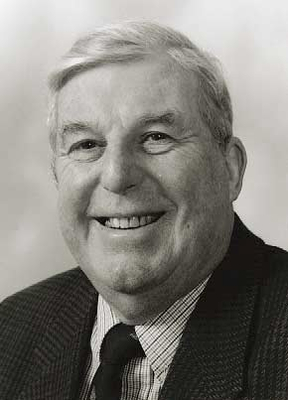
Create an event page to coordinate a gathering in honor of Kenneth
Tributes
Share a favorite memory, send condolences, and honor Kenneth’s life with a heartfelt message.
Alastair Robertson
By Alastair Robertson, University of Edinburgh I would like to add a word or two of appreciation as a colleague of Ken's. As a geologist, I was rather far from his research field when I was appointed to a lectureship in oceanography at Edinburgh University (1978). We were based in different buildings on the King's Buildings campus but met from time to time. He was always interested in what others were up to research-wise. On one occasion, I explained about my research on tectonics and sedimentation in Cyprus related to the famous Troodos ophiolite (ocean crust), where the concept of sea-floor spreading was first tested on land, by Fred Vine and Eldridge Moores. I mentioned their recently obtained palaeomagnetic data showing that the ophiolite had rotated anticlockwise by c. 90 degrees since its formation but that we didn't really know when and how this took place. Ken expressed interest and wondered if additional palaeomagnetic work could be done to help determine the timing of the rotation, in particular. Then one day Ken suggested that he could help to arrange for funding (via NERC) to enable a PhD student to carry out research on this topic. In due course, Tristan Clube who had recently completed his BSc at Oxford University was appointed and the research began, with Ken providing the background advice concerning palaeomagnetic sampling, data acquisition and processing, and myself providing the necessary geological information and logistical backup. Much was required of the student in the middle, however, to bridge the gaps between our very different knowledge and experience. The project was successful, especially as the igneous and sedimentary rocks associated with the Troodos ophiolite were very well suited to palaeomagnetic analysis, and we achieved definitive results leading to publications. Some additional palaeomagnetic sampling of the older rocks (Triassic-Jurassic) in W Cyprus (Mamonia Complex), however, suggested that the interpretation of magnetic data in such deformed rocks could be very challenging and would not always achieve viable results. Towards the end of Tristan's PhDs research, the sampling was extended to SW Turkey (Antalya area), where other research was being carried out by the Edinburgh University Tethyan group. This contributed useful data but time was insufficient to complete this study. Ken was keen to continue this research and so generously helped to make available further funding (again via NERC) which supported Antony Morris who had recently completed his MSc from Durham University, after doing his BSc at the University of East Anglia. Tony began by following up on the samples Tristan had collected in Turkey. After a time, it became clear that, although interesting, these rocks, like those in W Cyprus (of similar age) had experienced complex remagnetisation, limiting their use in tectonic reconstruction. A return to SW Turkey was difficult to arrange and so Tony began by carrying out further palaeomagnetic research in Cyprus, supported by new fieldwork, together with Tristan. The results were again successful and, in particular, determined the timing of the anticlockwise tectonic rotation of the Troodos ophiolite in much greater detail and also the nature (and sense) of tectonic movement along the Arakapas fossil transform fault zone in S Cyprus. Several publications again followed. Tony's PhD research then switched to studying tectonic rotations in S Greece, where the Tethyan group was also active. Ken was enthusiastic, especially as he could combine PhD fieldwork supervision with a summer vacation together with Zoe, and he drove all the way out (via Yugoslavia) to meet us in the Peloponnese. I do recall several very pleasant evenings in Greek tavernas during that visit and some lively discussion of disparate topics. This study provided new information on the tectonic rotation of a large crustal block in Greece (Argolis). Soon afterwards Tony completed his PhD and moved on; later Ken retired, and my involvement in palaeomagnetic research based in Edinburgh effectively ended. However, Tony and I continued to collaborate for many years, including similar tectonic-related palaeomagnetic research in S Turkey (Hatay), Syria (Baer-Bassit) and N Cyprus (Kyrenia Range). Ken continued to come in to work in the Grant Institute for many years. When meeting me, Ken's first question was always "how are Tristan and Tony doing?". He never lost his enthusiasm for his subject and his interest, particularly for those who had contributed.
Alex Jackson


From 1973 when he came to Edinburgh I was on lake bed sediment coring field work with Ken many times, he was always cheerfull and good company, I also recall him playing in the Geophysics staff football team against the students, although getting on in years he really enjoyed playing. Im posting 2 photos of coring fieldwork in Argentina in 1978 with Daniel Valencio and his research group. I have added a photo of Ken receiving a food parcel from the Eric Liddell Centre. The photo is dated 10th July so its likely to be the last photo of Ken
Antony Morris
I'd like to add to the tributes to Ken from his friends and colleagues, as one of the many people lucky enough to have been supervised by him during their PhDs. I started in Edinburgh in 1986, supervised jointly by Ken and Alastair Robertson. Ken famously produced the very first apparent polar wander curves for the continents (a major step towards proving the theory of plate tectonics), but my PhD project represented Ken's last involvement in tectonic palaeomagnetism - all of the other students in Ken's group at that time were focusing on geomagnetic analysis of lake sediments. My PhD interview was actually just a very nice chat with Ken as we toured the geophysics department and labs. I remember two things from this - how he teased everyone we met along the way in his typically good-natured and jovial way, and not being asked any project-related questions apart from "Do you think you could carry this rock drill up a mountain?". Looking back, I realise that actually Ken was rather cannily assessing my suitability for the project and whether I would fit in without me even knowing it! When I started, Ken took me straight to the lab, gave me a box of unanalysed samples from a previous unfinished project, showed me where the cryogenic magnetometer was and then left me to figure out how to use it to measure them. This was my first taste of Ken's hands-off approach to supervision. Never one to micromanage his research students, Ken would assume that you were fine and knew what you were doing unless you told him otherwise. This wasn't because he wasn't interested in you or had more important things to do - quite the opposite: he wanted you to discover things for yourself and then gave you space to develop, to make mistakes and learn from them. I remember many instances of Ken's generosity to his students, both at work and in many parties held at his and Zoe's home. For instance, in those days he had what seemed like a constant stream of international visitors passing through Edinburgh, and his students were frequently invited to join him and his guests for dinner in town, allowing us to meet and socialise with many of the world's leading researchers in palaeomagnetism. I'll end by sharing my favourite story related to fieldwork we did together in Greece one summer in the late 1980's, where Ken was accompanied by Zoe. We were having dinner outside one evening and the loud music from the restaurant was over-powering, making conversation difficult. Ken asked Zoe to pop inside and see if they would turn the music down a little. When she came back outside the music continued… but then a minute later was turned off completely! In amazement (this was a packed tourist restaurant in peak season), I asked Zoe what she had said to the staff, and she proudly replied "I told them that there's a very important British professor outside trying to talk to his student and that they should turn the music off to show him respect!". Ken was indeed a very important British professor and was respected by all who had the privilege to work with him… I'll remember him fondly and will always be deeply indebted to him, not only for starting me off on my research career but also for his friendship and cheeky good humour over many subsequent years.
Tristan Clube
Ken was my joint PhD supervisor at Edinburgh in the early 80s. Together with Alastair Robertson at the Grant Institute we used palaeomagnetism to help develop microplate tectonic models in the evolution of the Eastern Mediterranean. At the time few had successfully bridged the disciplines of solving smaller scale geological problems with palaeomagnetic techniques and it was a testament to Ken's open-mindedness and sense of adventure that we were able to successfully collaborate and develop this area of knowledge at Edinburgh. As Tony Morris mentions, Ken was very much a ‘hands-off' supervisor but was always there to offer his wisdom and generous help in a supportive role. He was completely unbureaucratic in his approach and adept at getting a practical solution and in that respect he was a very good mentor and teacher. At the same time he was very modest and approachable despite his evident academic achievements and significant reputation. Ken very much enjoyed the field work aspects of our projects and we had many an enjoyable evening sampling Mediterranean cuisine and of course local wines, admitedly of varied quality. As much of my field work was invariably spent in a tent, this was always something to look forward to! Zoe often accompanied Ken on these trips and we often talked about local politics, history and a multitude of other topics at a time when everyone seemed to have more time for each other and life was less of a rush. I look back on our time together with great fondness and will miss both Ken and Zoe greatly.
Fotini LIakopoulou-Morris
I came to Edinburgh in 1988 to start my PhD and Ken welcomed me as Head of Department. I was delighted to meet such an approachable and friendly professor, and being Greek I was even happier to discover that his wife, Zoe, was also Greek - they both made me instantly feel at home. Ken was very supportive and gave me great guidance - once I was having difficulties with my data (getting more and more frustrated) and Ken's advice was fantastically helpful… he told me to "forget about it for a while, go the cinema and watch something enjoyable, and when you come back you'll find your way again". I still follow his advice to this day! I will always fondly remember many happy times spent with Ken and Zoe at their home during my time in Edinburgh and beyond. My life has been enriched by knowing them both, and I will miss them greatly.
Joan Roche

Ken was a lovely grandfather to my daughter Josephine and son Constantine. "They always had so much fun with Ken, as he allowed them to clamber and crawl all over him and the children really enjoyed all the jokes and games that he played with them, as Ken was very attuned to their sense of humour." "I recently visited Ken with Josephine and we had fun reminiscing and playing spelling and mathematical games. He answered every question correctly despite his advanced years and health. He was so knowledgeable and it was always wonderful to hear him talk about his projects all around the world. He enhanced our lives. Joan Roche



Copyright © 2026 Keeper Memorials, All rights reserved.