Por favor, ingresa un mínimo de 2 caracteres para buscar.
Por favor, ingresa un mínimo de 2 caracteres para buscar.

Guardianes del Memorial(1)
Administran este memorial. Contacta o únete

Cheryl Pierce
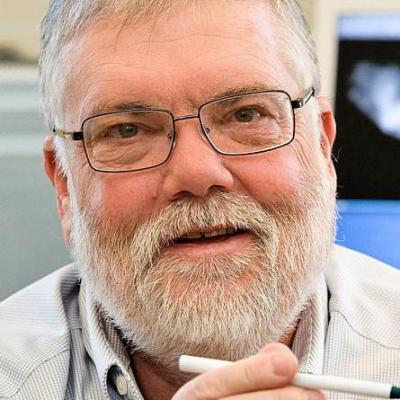
Jay Melosh
23 de junio de 1947 - 11 de septiembre de 2020
23 de junio de 1947 - 11 de septiembre de 2020
H. Jay Melosh was a trusted scientist known around the world as well as a kind and caring colleague, friend, and family man. He had a phenomenal number of publications that have changed the field for the better. He has had an asteroid named after him (8216 Melosh). He was a University Distinguished Professor of Purdue University and a Regents Professor at the University of Arizona. He was awarded the American Geophysical Union 2008 Harry H. Hess Medal - for “outstanding achievements in research in the constitution and evolution of Earth and sister planets.”
In addition to his scientific life, Jay was an avid woodworker. Over the years he made furniture, a wonderful clock and was a consignment artist at Artist’s Own, and Art Co-op in Lafayette, IN. He often commented that his most popular item he sold at Artist’s Own was seam rippers, a tool used by sewing enthusiasts. Jay and his wife Ellen built a cabin in New Mexico together. She says, "I mean literally we pounded every nail and designed it ourselves. Jay used a text from high school on building as our guide. Jay loved our little lake here on Cape Cod and spent lots of time in his small boat out on the lake." Jay also enjoyed travel, which he did extensively. He had visited every continent except Antarctica and had wonderful stories about every visit.
Below is a section of his wikipedia page in order to know the scope of his amazing works:
He was an American geophysicist specializing in impact cratering. He earned a degree in physics from Princeton University and a doctoral degree in physics and geology from Caltech in 1972. His PhD thesis concerned quarks. Melosh's research interests include impact craters, planetary tectonics, and the physics of earthquakes and landslides. His recent research includes studies of the giant impact origin of the moon, the Chicxulub impact that is thought to have extinguished most dinosaurs, and studies of ejection of rocks from their parent bodies. He was active in astrobiological studies that relate chiefly to the exchange of microorganisms between the terrestrial planets (a process known as panspermia or transpermia).
Melosh was a member of the American Geophysical Union, Geological Society of America, Meteoritical Society, American Astronomical Society (Division of Planetary Sciences,) and the American Association for the Advancement of Science. He was the recipient of the Barringer Medal of the Meteoritical Society for his work on the physics of impact, and of the G. K. Gilbert Award from the Geological Society of America. He was elected to the National Academy of Sciences in 2003.
Eventos

Crea una página del evento para coordinar una reunión en honor de Jay
Homenajes
Comparte un recuerdo favorito, envía condolencias y honra la vida de Jay con un mensaje sincero.
Cheryl Pierce
Part 1 of 2 by colleagues Marc W. Caffee, Timothy D. Swindle, and Elizabeth (Zibi) P. Turtle H. Jay Melosh passed away on September 11, 2020 in Cape Cod, Massachusetts. Jay’s research career spanned five decades, during which time he served on the faculty at Caltech, SUNY Stonybrook, University of Arizona, and Purdue University. Jay’s research interests were diverse and influential. His work on the geophysics of impact processes revolutionized understanding of not only the impact processes themselves, but the important roles impacts have played in the evolution of the solar system, Earth, and the development of life. Jay was born on June 23, 1947 in Patterson, New Jersey and grew up in nearby Ridgewood. He completed his elementary schooling at New Hampton High School in New Hampshire, but not before shattering multiple windows from a chemistry experiment gone awry, a harbinger of his later research in the shattering and explosive effects of impacts. He earned a Bachelor’s degree (Magna Cum Laude) in physics from Princeton University in 1969. He then attended Caltech from 1969 to 1972, earning his PhD in Physics and Geology. His research advisor was Nobel laureate Murray Gell-Mann. Although Jay published a highly cited paper on quarks in 1974, during his time as a research associate at the Enrico Fermi Institute at the University of Chicago his passion was geophysics. In 1976 Jay took his first faculty appointment at Caltech, where he worked until 1979. During this time Jay explored the role of impacts in determining the orientation of the Moon as well as the relationship between the Moon’s orientation and mascons, concentrations of denser material beneath the lunar surface that cause an increase in the local gravitational pull. Jay continued to study these enigmatic features and more recently was a member of the scientific team associated with the GRAIL lunar spacecraft, which confirmed in greater detail the link between these mass concentrations and the impact cratering process. Jay left Caltech in 1979 for SUNY Stonybrook where he was an Associate Professor of Geophysics for three years. In 1982, Jay joined the Planetary Sciences faculty at the University of Arizona, working there until 2009. During this time Jay continued groundbreaking research in the nature and effects of impacts on Earth, and other planetary bodies, literally writing the book on "Impact Cratering" in 1989. Together with his students and postdoctoral researchers, he explained how impacts on Mars could deliver meteorites to Earth, explored details of how Earth’s Moon could have been formed by a giant impact 4.5 Gyr ago, and performed detailed theoretical calculations that led to a more complete understanding of the Chicxulub impact, the event that led to the disappearance of dinosaurs 66 million years ago. In 2009, Jay moved to Purdue University, where he built a planetary science group within the Earth, Atmospheric, and Planetary Sciences Department. During his time at Purdue University, Jay and his students continued investigations of impact processes and other geophysical phenomena. His work spanned a wide variety of celestial objects: Earth and its Moon, Mercury, Venus, Mars, Pluto, comets, and giant planet satellites including Callisto, Ganymede, Europa, Titan, Miranda. Jay viewed his role as an educator and mentor with great enthusiasm. Jay advised over 20 graduate students who ultimately received PhDs in the disciplines of geology, planetary science, and physics. Jay also sponsored many undergraduate students, helping them early in their careers to explore what it meant to be a scientist. Although his training was in theoretical physics and geophysics, Jay had a deep passion for geologic field studies and the lessons that could be learned about planetary processes by studying analogs here on Earth. Jay relished field trips, and with a Socratic, and at times irreverent, approach that drew students into the excitement of exploration and discovery on their own, he led numerous trips to nearby sites such as Meteor Crater and the Pinacate Volcanic Field, as well as sites further afield like the Channeled Scablands and Yellowstone. His field trips at Arizona were legendary. While the development of geologic field expertise was the priority, these trips were seldom without high adventure, much to the dismay of university officials responsible for the repair of vehicles damaged or sacrificed for the sake of learning. Late in his tenure at Arizona, a survey of alumni about the curriculum revealed that many of them viewed Jay’s field trips as the most valuable learning experience they had in graduate school. His understanding of geologic processes and his ability to explain them in terms that not only educated but engaged students, and his colleagues, was unique. Jay encouraged students to take scientific chances, not to be afraid to consider new ideas or to revisit old ideas that had previously been overlooked. He considered school a time to explore and to make the most of opportunities, even if not directly related to one's research. Jay's love of learning, of questioning established wisdom (often with a mischievous grin), and of searching for answers to mysteries – new or old – were inspiring and exemplified just how much fun scientific investigation can be. He modeled this in his own career. His studies on the mechanisms for launching meteorites from Mars led to a long-standing interest in the possibility of life-forms being exchanged between the two planets. He served on a panel of senior scientists reviewing selected UFO reports, a panel that concluded in 1998 that while there was no evidence of extraterrestrial visitations, there was sufficient evidence that there could be “unusual phenomena currently unknown to science” that would certainly be worth studying. continued....
Boris Ivanov
I and many my colleagues in Russian Academy of Science will remember Jay forever. We met in 1989 and worked together for many topics. His beautiful mind and deep experience helped me to expand horizons and to borrow essential moral rules. I deeply regret. Boris Ivanov, Moscow, Russia
Denton Ebel
It was sad to hear of Jay's sudden passing. Jay was always a great source of career advice, and I was happy as a Purdue MS & PhD grad to see him join the Purdue faculty, where he brought such excellence in planetary science. Faith Ebel and I had lovely times with Jay and Ellen at Meteoritical Society meetings. Fun to talk science with, or to be on a dance floor with. We will miss him!
Cheryl Pierce
A reading from Ellen Melosh: Jay was not a deeply religious man. He did embrace the Unitarian Universalist faith which we shared together. If he had a statement of belief, I think the following words by Patrick Murfin from his book, “We Build Temples in the Heart” express it well. Credo We believe - that many streams join to make a river, that the way to wisdom lies in an open ear and heart, that goodness may be pursued for the sake of goodness and not from fear of punishment, that knowing and not knowing are part of the same, and ambiguity is permissible. And from Rev. Tom Owen Towle’s book “Freethinking Mystics with Hands”. Jay was very pleased with my sermon on this topic and especially the following: Freethinkers are rethinkers, neither afraid to take sides nor reluctant to change sides. No tradition, no revelation, no privileged knowledge lies beyond question or critical examination. There is only experience to be interpreted in the light of further experience. Words from Ellen: I met Jay 20 years ago through an on-line matching service - yes, they did exist 20 years ago! We often laughed about the fact that I was looking for someone to go to some holiday parties with - I just didn’t know how many holiday’s I’d end up spending with him. My first attraction to Jay was his intellect. Jay was a man who never ran out of new ideas and new areas to explore. He was the quintessential professor. He loved every one of his students, both graduate and undergraduate. He would often turn to me when a student was having difficulty and ask how he should handle it. Why he thought I’d help, I have no idea. But we spent many hours talking through ideas and strategies. And Jay would be so happy when a student had a particular success. Jay often spoke of Ed McCollough, with whom he worked at the University of Arizona. Ed’s emphasis was on excellence - believing that good was the enemy of excellence. Jay adopted this philosophy and lived it to his last days. He strongly believed that science needs to be rigorous and that the best science comes from struggling through difficult problems and constant learning. And there was another side of Jay Melosh. He was a tender, caring and supportive mate. He encouraged me to try many new things and was beside me 100% as I began my efforts at a weaving studio. He loved to share his science with me and seemed to love to hear of my newest weaving students and weaving adventures. We had an amazing relationship with almost no areas of disagreement. So often we would vocalize exactly what the other was thinking. He was delighted to have found his “perfect retirement house” on Cape Cod and we spent the past two years making perfect for us. He was truly my sole mate and I will miss him more than words can say. Jay took great pride in how the Planetary Science program at Purdue developed. He would never take credit for it, always saying that its success was the result of everyone’s work. To the Planetary Science faculty at Purdue, and especially the new, young faculty, I hope you will endeavor to live up to the standards Jay Melosh tried to instill in his students and colleagues. Always strive for excellence. Always embrace new ideas and new directions. Don’t get stuck repeating the same research over and over. And always remain humble, remembering that seldom are new discoveries made by a single person. Make Jay proud!! I’d like to end by quoting from the preface of Jay’s last book - Planetary Surface Processes. I think his words are important and I hope others will take them to heart. “Anyone who teaches this subject must realize that planetary science is an active and ever- changing subject. New discoveries are constantly being made. ..... Ah yes, one last piece of advice (and my former students would not forgive me if I failed to mention this!) The stories. Some of them are here in the book, cleaned up a bit and properly referenced. .... Stories about people, about ideas, about what motivated them to do what and how some great idea came from something that seemed wholly unrelated. Some of it is the usual scuttlebutt of science, told over coffee or around campfires. But most of my stories are different: Like Aesop’s fables, they all have a moral. Like all teachers I am often distressed by how little students seem to remember about a topic after the lapse of even one semester, let alone a few years. So I try to wrap the really important ideas into a really good story about someone or something. .... I’m not sure it works but I do meet students who, after many years, still retain the story, if not the point that it was meant to illustrate. ..... I do ask you not to drain the human interest from science. Science is done by humans, and for humans to continue to do it they must realize how quirky and illogical the course of discovery can be.”
Bob Cronon
I am so sorry for the loss of Jay, who clearly meant so much to his family, friends, colleagues, students, and science. I wish I had gotten to know him better. May his love and memory liven on in the hearts of many.
Louise Faucher
Jay’s wife Ellen runs a weaving studio in their home to which I belong and therefore had the pleasure of getting to know him a bit. Although I understand he was a giant in his field of planetary science, he was just a regular guy around the house with a ready smile and a warm greeting. He was the kind of person you just liked immediately. It was a joy to have met him and I extend my condolences to his family at his untimely passing. Louise Faucher




Copyright © 2026 Keeper Memorials, Todos los derechos reservados.